
Helmingham PrimarySchool & Nursery

Our family of schools
-

Barnby and North Cove Primary School
-

Glebeland Primary School
-

Helmingham Primary School and Nursery
-

Kirkley Nursery
-

Mendham Primary School
-

Middleton Primary School
-

Reedham Primary School
-

Rendlesham Primary School
-

Southwold Primary School
-

St Edmund's Primary School
-

Warren School
-

Henley Primary School
-

Yoxford & Peasenhall Primary Academy
-

Winterton Primary School and Nursery
-

Riverwalk School


Reading, Writing and Phonics
Reading
Phonics
At Helmingham, we teach phonics using the Little Wandle scheme. Children begin learning phonics when they start school at the beginning of nursery all the way through to the end of Year 1.
Little Wandle is a systematic programme which teaches children to learn to read and write using phonics. This happens through daily, structured lessons. Children are taught the skills they need to confidently recognise sounds, blend them to read words and develop strong early reading and spelling skills.
This approach ensures that all children, regardless of their starting point, make rapid progress. We regularly assess pupils to provide targeted support where needed, so every child can experience success.
Alongside our phonics lessons, we also prioritise children's early reading skills. Children are given a phonetically decodable reading book to read at home. This is sent home as soon as children are able to read regular, decodable cvc (consonant, vowel, consonant) words. Children in Reception may be given a set of 'flashcards' to look at and recap some of their learning at home.
Once children progress through the phonetically decodable reading books, they move onto the Accelerated Reader reading programme.
For further information please visit the parents' section of the Little Wandle website For parents | Letters and Sounds
Alongside our phonics lessons, we also prioritise children's early reading skills. Children are given a phonetically decodable reading book to read at home. This is sent home as soon as children are able to read regular, decodable cvc (consonant, vowel, consonant) words. Children in Reception may be given a set of 'flashcards' to look at and recap some of their learning at home.
Once children progress through the phonetically decodable reading books, they move onto the Accelerated Reader reading programme.
Children in Reception and Year 1 take part in small group reading sessions. During these sessions they focus on reading with fluency, expression, comprehension and decoding skills. We begin these sessions once children are able to read a phrase or sentence containing decodable words. Once children are reading fluently and have moved onto Accelerated Reader books, they no longer require small group reading groups. Instead, they have whole class reading sessions during which we use the VIPERS skills as a focus for learning.
Flashcards
Children will learn up to four phonic sounds per week during phonics lessons. Each child in Reception and in Year 1 will take home flashcard strips with the sounds they learnt during the week.
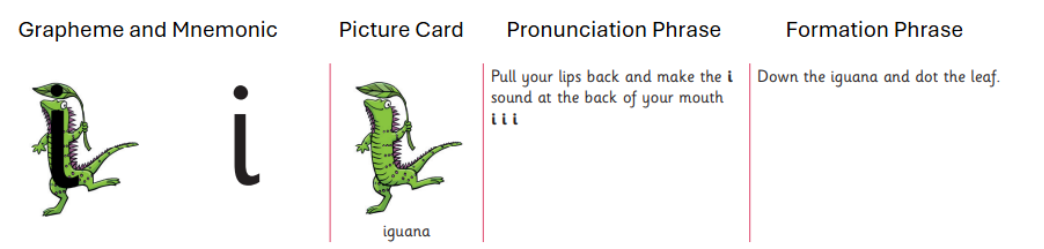
There is an example of a flashcard below. It has the sound and a picture relating to the sound. A phrase to help with pronunciation and a phrase to help with formation. When children are writing we encourage them to form letters correctly from the beginning. This allows children to develop good handwriting habits from the very beginning of school.
Reading In School
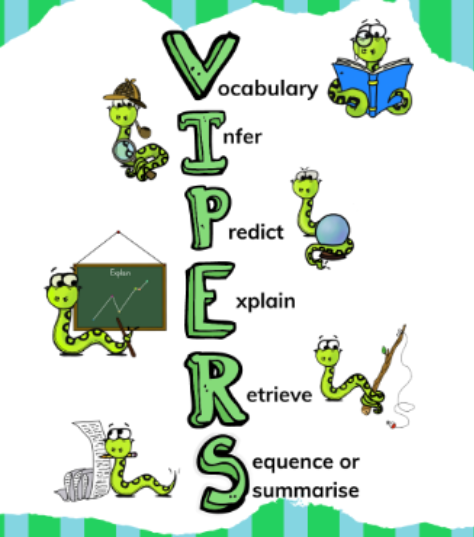
Each week children complete up to three, small group, guided reading sessions a week in school. We also listen to children read individually. We carry out regular assessments of children’s phonics and reading ability to ensure they are reading a book from the correct level. Once a child is reading accelerated reader books they will no longer be taking part in small group guided reading sessions. Instead, they will have whole class reading sessions. During the sessions children will focus on the skills of vocabulary, inference, prediction, explanation, retrieval and sequence. The children will talk about these skills as ‘vipers’ skills.
Guided Reading Sessions
During guided reading children will read a book in a small group with an adult. The adult will ensure that they hear all children read during these sessions. Guided reading sessions will focus on children’s ability to recognise phonic sounds in the book, the children’s understanding of what happens in the text and the ability to read clearly, fluently with good expression.
Reading at Home
Children bring a reading book home weekly. It will be a colour levelled book or an accelerated reader book.
When we move children up to a new book level to take home, we will ensure that your child can read books from their level ‘fluently’. We will decide a child is reading fluently when:
-
They can read 90% of words without sounding the words out (i.e. reading 9 out of 10 words either by sight or sounding out quickly in their head) when reading books at green level or above.
-
If they read at a good pace. This is approximately 60 words per minute by the end of Year 1, 90 words per minute by the end of Year 2. Children in Reception will be reading slower than this.
-
Can the child talk about and understand what they are reading.
We will only move a child up when we are confident that they have met all the above criteria for reading with fluency.
In KS1 we ask for parents to read with their children as often as possible at home.
We ask for children reading ‘colour level’ books to read their books twice before changing them. This allows children to develop their reading fluency and their understanding of the text before changing it. Children on accelerated reader reading books only need to read their book once as these books tend to be longer.
Children also take home a ‘story book’ where possible. This book is for parents to read and enjoy with their children. Children are not expected to be able to read their story book themselves. This is simply to give the children an opportunity to choose a book to take home and enjoy looking at with a family member. Children will have the opportunity to change their story book weekly.
Writing
Writing Intent Statement
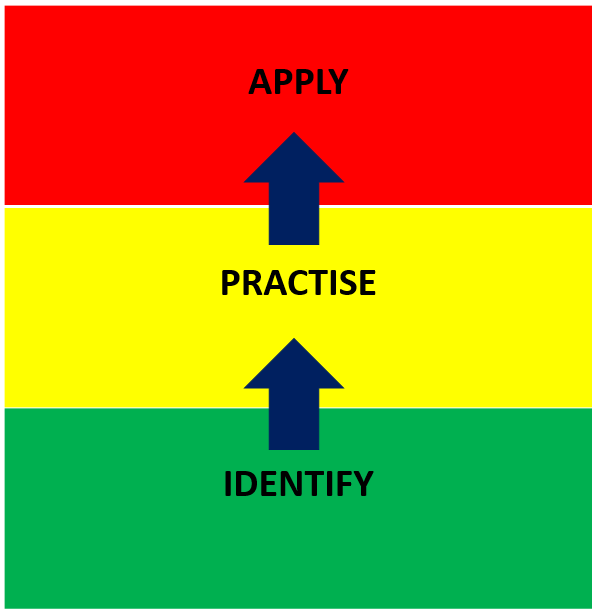
At Helmingham, we appreciate that writing is a major form of communication as well as an outlet for children’s imaginations and curiosity. We believe that providing a challenging and inspiring curriculum, that teaches the skills behind good writing whilst embedding a love for the written word, is every child’s right. Through discrete spelling, punctuation and grammar lessons, we allow children to identify, practise and apply key techniques that allow children to strengthen their skills in writing composition. At Helmingham, we believe that writing should be a joy, so we aim to provide engaging, topic based writing opportunities as part of a cycle that allows every child to write based on experiences, their knowledge, their interests and varied abilities.
Our Writing Cycle
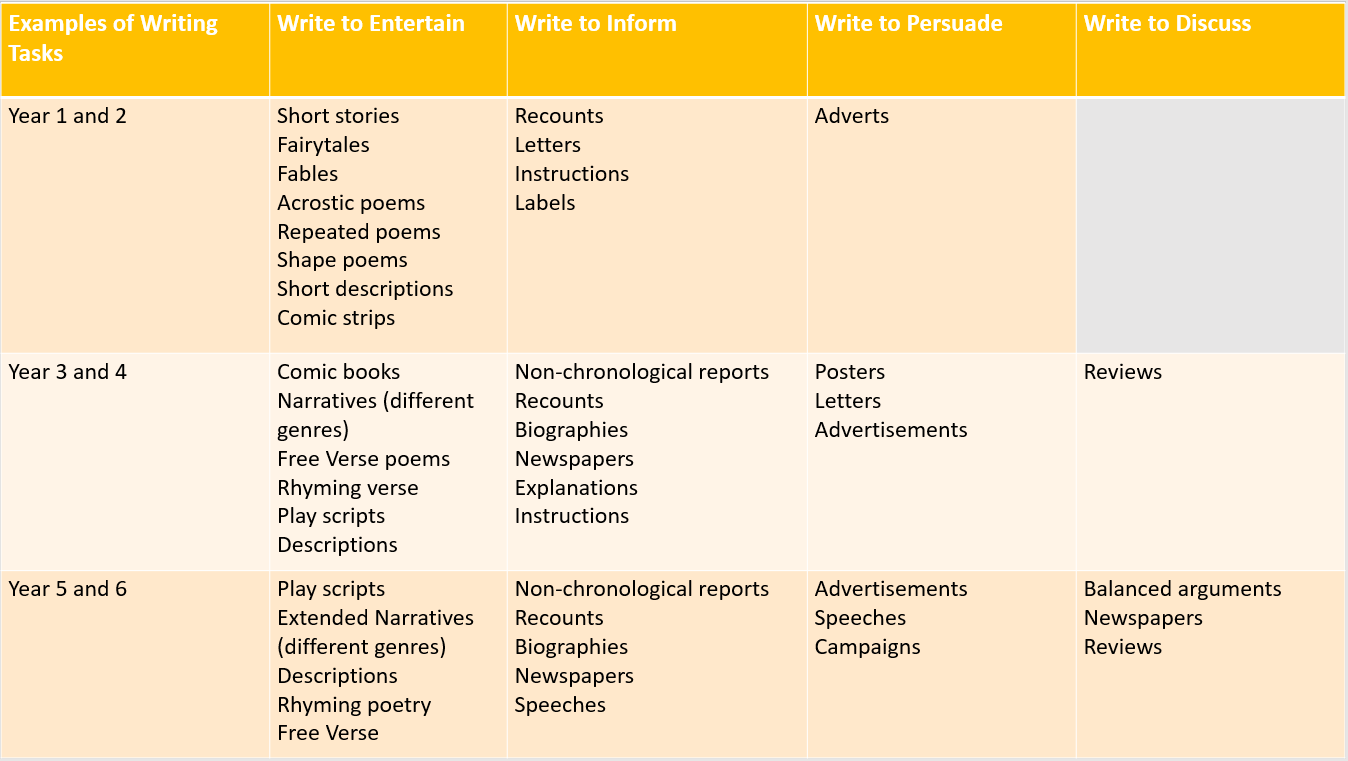
Writing lessons at Helmingham are based heavily on our topics. We focus on teaching writing for a purpose and ensure that, over the course of the academic year, pupils will have the opportunity to entertain, inform, persuade and discuss, through the following styles:
Writing tasks are structured through the following cycle:
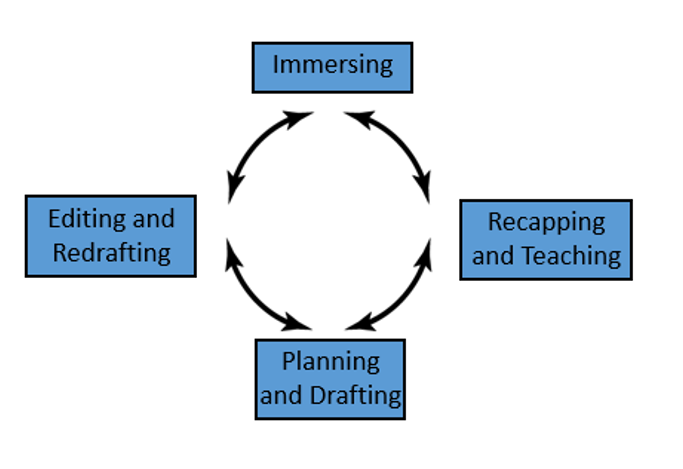
Immersing: At the start of a writing cycle, the children are immersed in their writing subject. This may involve a variety of cross curricular activities using art, drama, reading a particular text or even going on a school trip. This is an important starting point that gives pupils an experience on which to write about, rather than expecting them to write about something that is abstract to them.
Recapping and Teaching: At this point in the cycle, the teacher focuses on recapping and teaching key skills that will allow the child to write successfully. These lessons will involve looking at the language, structure and grammatical and punctuation skills.
As part of this section, lessons in developing sentences through spelling, punctuation and grammar. Key grammatical and punctuation skills are taught through the following three steps in order to develop a deep conceptual understanding of the skills:
Planning and Redrafting: As soon as the teacher feels confident that the children have a strong understanding of what they are writing, why they are writing and how they are going to write it, pupils then move on to plan and write their composition. This first draft will then be marked by the class teacher before moving on to the last and final part of the cycle.
Editing and Redrafting: This final stage gives children the opportunity to look at their work, edit it and then take a section of their writing to redraft and improve it. Time is taken to teach our pupils how to edit and improve effectively and teacher's continuously encourage pupils to identify where they can upscale their writing.
Spelling
Spelling
Spelling from the end of Key Stage 1 and throughout Key Stage 2 is taught using the Sounds and Syllables spelling scheme. Children work their way through six tiers to learn all the spelling rules outlined in the National Curriculum through a dyslexic-friendly strategy, allowing them to split words into syllables and focus on one syllable at a time.
Greenfields Handwriting Expectations
At Greenfields, we maintain high expectations for handwriting and letter formation across all year groups. We recognise that clear, consistent handwriting supports pupils’ confidence, presentation, and overall written communication.
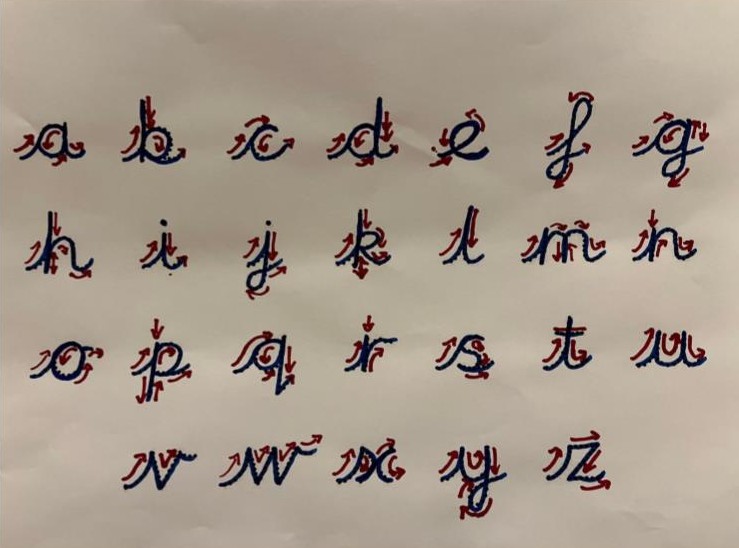
In the Early Years Foundation Stage (EYFS), children are introduced to correct letter formation through the Little Wandle phonics scheme. This learning is carefully reinforced as pupils progress through the school, with Bubble Writing used as a consistent approach to support neat and accurate letter formation.
In Key Stage One, pupils are taught to form letters using clear, correctly shaped print handwriting. As children move into Key Stage Two, they are taught to adapt their handwriting by using lead-ins, enabling them to develop a fluent, consistent cursive style that supports speed and legibility.
All staff in EYFS and Key Stage One are expected to always model correct print handwriting, ensuring pupils are consistently exposed to high-quality examples. Guidance is provided below and on the Little Wandle website to support the correct formation of lowercase letters, alongside simple phrases to help children remember the appropriate movements.
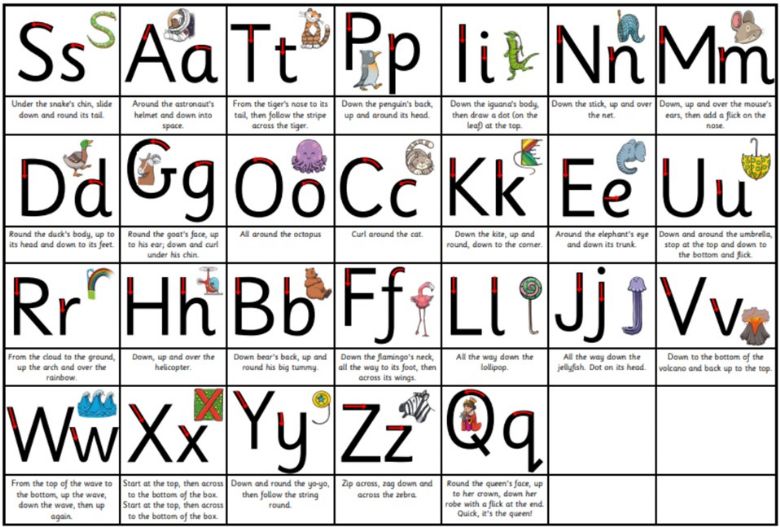
In Key Stage Two, pupils are taught to begin letters with a lead-in, starting on the line before forming each letter accurately. They are then supported to join letters appropriately when writing words. Capital letters are not joined and should continue to be formed as taught in Key Stage One. Staff in Key Stage Two are expected to consistently model neat, accurate cursive handwriting.
The example below illustrates the agreed letter formation and handwriting style used across the school, ensuring a consistent approach for both pupils and staff.